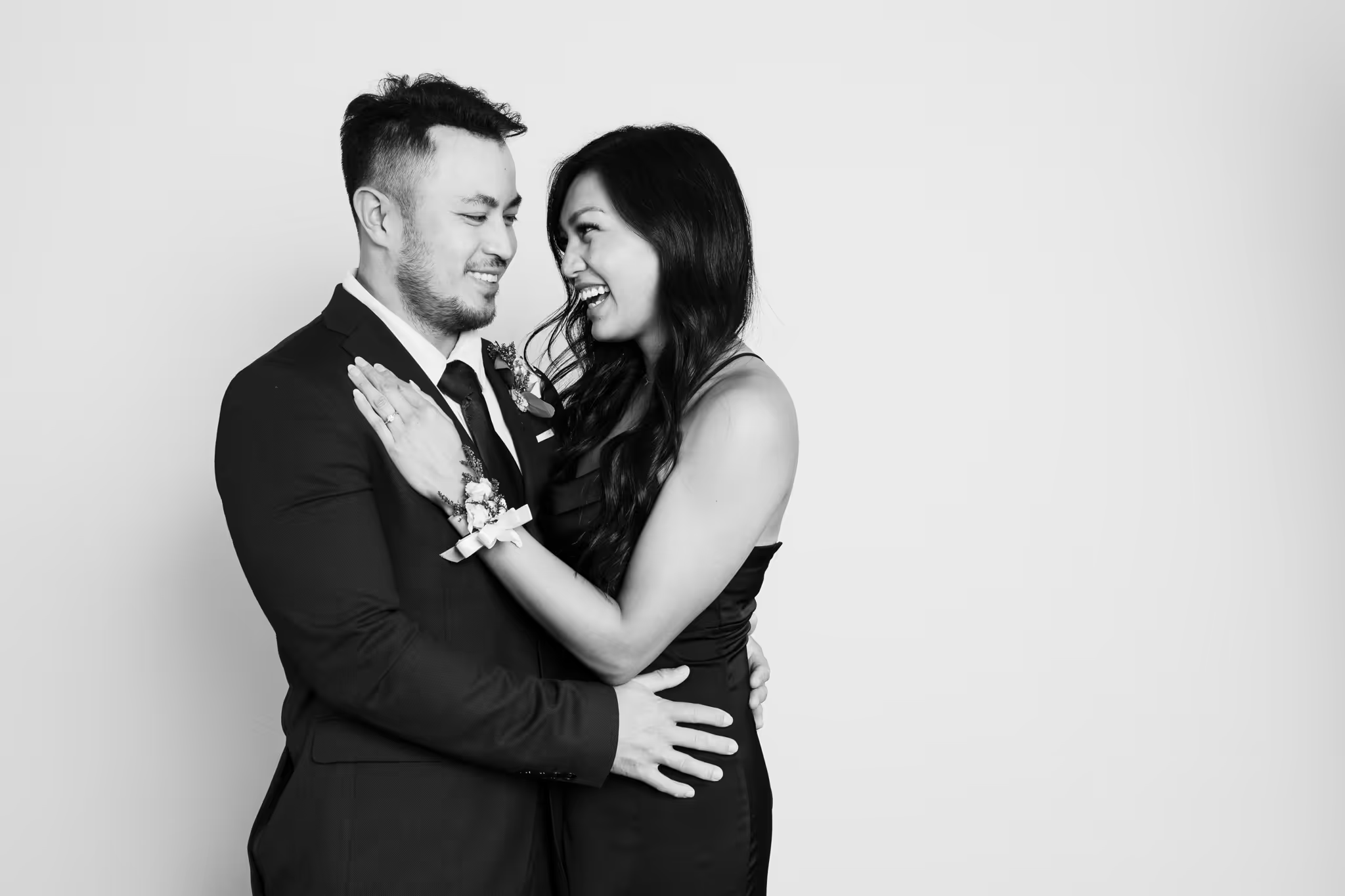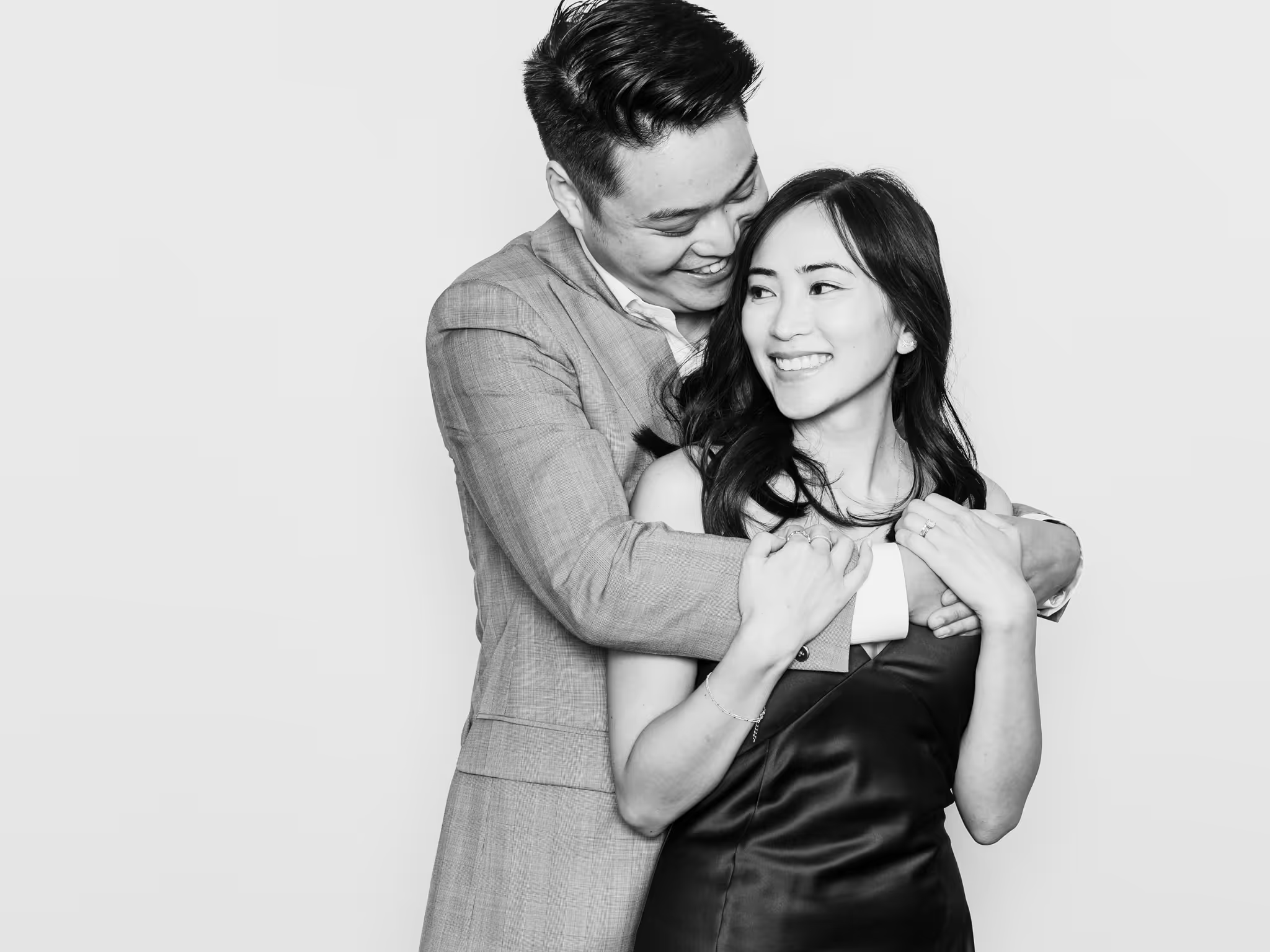


A good reception timeline answers one question most couples never think to ask: when will your guests actually step in front of the camera?
You probably spent hours choosing your centerpieces, obsessing over the seating chart, and testing every song on your playlist. But the timing of your wedding photo booth is something most couples figure out on the fly, usually by asking the venue coordinator the week before. That gap in planning is where portraits get missed, grandparents leave before a single frame is taken, and an expensive service ends up serving only half your guest list.
This guide walks you through the real rhythm of a Vancouver reception, from cocktail hour through the last dance, so you can decide exactly when your portrait station should open, pause, and close. When you get the wedding photo booth timing right, it supports your evening rather than interrupting it.
The Grandparent Problem Nobody Talks About
Here is something worth saying plainly: the people whose portraits will mean the most to you twenty years from now are usually the first ones to leave.
Grandparents, elderly relatives, and families with young children rarely stay past dessert. Once the cake is cut and the main dances are done, they start gathering their coats. It is not a reflection of how much they love you. It is simply biology and bedtime.
If your photo booth only opens at 9:00 PM when the dance floor fills up, those guests will never step in front of the lens. You will have five hundred photos of your university friends doing group poses and exactly zero of your grandmother in her good dress, looking at the camera with that quiet, proud smile.
This is why portrait timing is not just a logistics question. It is an empathy decision. Planning around early departures means you are thinking about who matters most, not just who stays the latest.

Three Timing Windows, and What Each One Actually Means
Every reception is different, but most portrait station timing falls into one of three windows. Understanding the tradeoffs helps you choose what fits your specific day and guest list.
Option A: Cocktail Hour Only
Opening the portrait station during cocktail hour has one clear advantage: your guests are at their absolute best. They are freshly dressed, drinks in hand, still buzzing from the ceremony. The energy is relaxed and social, which makes for genuinely warm portraits.
The catch is that the two people who hired the service are usually somewhere else. Most couples are off finishing their own newlywed portraits with their primary photographer during cocktail hour, which means you miss the moment entirely. You will see the photos later, but you will not have been in the room when your relatives made memories together. For some couples, that is fine. For others, it feels like a loss.
Option B: After Dinner and Speeches Through Dancing
This is the most common window, and for good reason. Once dinner wraps and the formal toasts are done, guests loosen up. People laugh more easily, groups form naturally, and the energy of the room is at its most spontaneous. This is when the fun portraits happen.
The downside is that this window starts too late for early departures. If dinner ends at 8:00 PM and speeches run until 8:45, you may only have a narrow window before the grandparents are already saying their goodbyes. There is also a placement risk: if the portrait station sits too close to the dance floor, guests feel pulled in two directions and neither experience feels complete.
Option C: Split Coverage, Early Evening Into Reception
This is the approach that consistently works best for Vancouver receptions in the 80 to 150 guest range. Opening during the tail end of cocktail hour or immediately after dinner wraps gives older family members a natural, unhurried window to step in for a portrait before the party shifts into a later gear.
When the dancing begins, the studio is still open. Now it attracts a different crowd: friend groups, siblings, the bridal party doing impromptu setups. The room energy changes, and the portraits change with it. You get both the quiet family moments and the lively group energy, without either audience feeling rushed.
How to Work Around Speeches, Dinner, and Formalities
Never run a portrait station while someone is holding a microphone. This sounds obvious, but it matters more than most couples expect. Parents, best friends, and siblings put genuine emotion into those speeches. When guests feel the pull of an open photo booth nearby, attention splits. The person at the microphone can feel it, and the moment loses weight.
A professional portrait studio operator knows to pause the experience during formal toasts, the first dance, and the cake cutting. This is not a disruption to the service. It is part of how the service works. The studio pauses respectfully, the room focuses on the moment, and then the music starts again and guests naturally drift back over.

Room placement also shapes how guests experience the studio. A portrait station works best when it is visible from the main reception space but positioned away from the main flow of foot traffic near the bar, dance floor entrance, or catering doorways. You want guests to discover it naturally, not feel like they are walking against traffic to reach it.
How a Portrait Studio Works Alongside Your Main Photographer
Some couples worry that having a portrait station creates tension with their wedding photographer. In practice, the two roles are completely separate, and a good portrait studio operator will be the first to say so.
Your primary wedding photographer is there to document the story of your day. They follow the couple, capture candid expressions, and build the visual narrative of the room as it unfolds. Their job is fluid and reactive.
A portrait studio provides something different: a dedicated, studio-lit space where guests receive an individual or couple portrait taken with intention. The lighting is controlled, the framing is consistent, and every person who steps in front of the lens gets a proper photograph rather than a quick candid. It does not pull the main photographer away from the couple because it was never their job to do that work in the first place.
Think of it as a complementary layer. One captures the feeling of the day in motion. The other creates portraits that feel timeless.
Coordinating the Timeline: Practical Guidance
Getting the timing right comes down to three decisions made before the wedding day, not on it.
Identify your early departures first. Look at your guest list and honestly mark who is likely to leave before 9:00 PM. If that group includes people whose portraits matter deeply to you, build in a pre-dancing window specifically for them.
Map the formal moments. Sit down with your schedule and mark every moment where attention belongs on the room, not on the portrait station. Speeches, the first dance, the parent dances, and the cake cutting all fall into this category. These become natural pause points, and a good operator will already expect them.
Give guests enough time to feel unhurried. The biggest mistake couples make is opening the portrait station too late and then wondering why the line felt rushed. When guests feel pressure to hurry through a portrait experience, the results show. A calm, well-timed window produces portraits that actually look like the people you love.
FAQ: Wedding Photo Booth Timing in Vancouver
When should a wedding photo booth open during the reception?
The best opening window depends on your guest mix. For receptions with older relatives or families with young children, opening during the tail end of cocktail hour or right after dinner is the strongest choice. This ensures early departures have a real opportunity to participate before the evening shifts into a late-night format.
Should the photo booth run during cocktail hour or reception dancing?
Both windows have value, but they serve different guests. Cocktail hour catches older relatives while they are fresh and present. Reception dancing catches younger guests and friend groups when they are energized and playful. Split coverage, if your schedule allows, gives you both.
How long should a wedding photo booth be open?
For a reception of 80 to 150 guests, two to three hours of active coverage is typically enough to reach everyone who wants a portrait. Spreading that time across two windows, rather than running it as one long unbroken block, usually produces better results and more variety.
Does a portrait studio conflict with the wedding photographer?
No. A portrait studio and a primary wedding photographer serve completely different purposes. Your photographer documents the day as it unfolds. A portrait studio provides a dedicated space for guests to receive a proper individual or couple portrait. The two services work side by side without overlap.
What happens if the photo booth runs during speeches?
A professional operator will pause the studio during speeches and other formal moments. This is standard practice and protects the integrity of those moments. The studio resumes naturally once the formal portion of the evening is complete.
What venues in Vancouver work well for a portrait station setup?
Urban loft spaces, waterfront event venues, and heritage buildings across Metro Vancouver all work well. The key factor is having a corner or secondary room where the studio can be visible but not placed in the main foot traffic path. Good lighting access and a bit of separation from the DJ or band also help.
Getting the Timing Right for Your Evening
The wedding photo booth question is really a question about who you want to include and when. Open too late, and the people you will miss most are already in a car heading home. Open at the wrong moment, and guests feel pulled away from the parts of the evening that deserve their full attention.
The right answer is a portrait station that fits naturally into the rhythm of your evening, pausing when the room needs to be quiet and opening when guests are ready to step forward. That takes planning, experience with Vancouver reception dynamics, and a clear conversation with your portrait team before the wedding day arrives.
If you are still building out your reception timeline, reach out to the team at The Portrait Studio. We are happy to look at your specific schedule, venue layout, and guest list and help you find the window that makes the most sense for your evening.